
Google Forms has no signature field. Getting a Google Forms signature means picking one of three routes: a Marketplace add-on, an uploaded image of a signature, or a form builder where the signature field is built in.
Quick answer
- You need the signature on a Google Form: install a signature add-on. It adds the field, and it owns the signed PDF and its delivery.
- You only need proof of consent: a typed full name plus a checkbox, with the timestamp Google already records, covers many consent cases.
- You need the signature stored with the response: use a form builder with a signature field, where people sign as they submit.
Does Google Forms have a signature field?
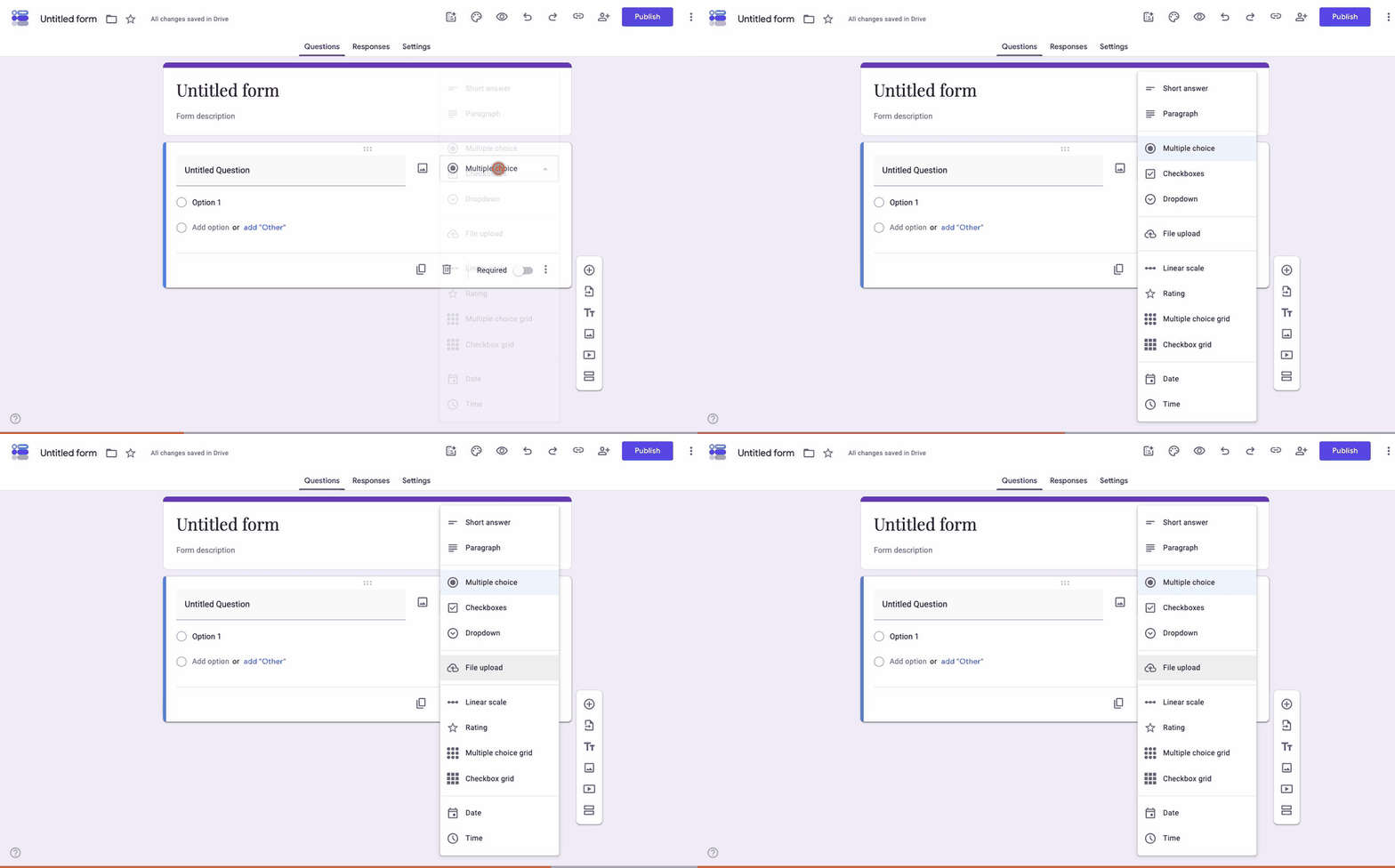
No. Google's list of question types runs from short answer and paragraph through multiple choice, checkboxes, dropdown, file upload, linear scale, rating, grids, dates and times. Signature is not on it, and there is no hidden setting that adds one.
Google does have an eSignature tool, but it lives in Google Docs and Drive rather than Google Forms. In Docs you request a signature on a document and track it, and signers either type their name or draw it.
Google offers no built-in connection between a form response and an eSignature request. The feature is also limited to the paid Workspace plans from Business Standard up, plus Workspace Individual, so a personal Gmail account does not get it.
How to add a signature to a Google Form with an add-on
Two add-ons dominate the Marketplace for this: Signature in Google Forms by Bolo and Formesign. Both add signature fields to your form from the add-on menu, and both save a signed PDF to your Drive. Bolo says respondents sign inside the form workflow and that they need no Google account, and it tracks requests from its own dashboard. Formesign runs its setup through a wizard and is SOC 2 Type II certified.
On price, Bolo advertises a free plan with paid tiers for higher usage. Formesign is paid from $18 a month after a seven-day trial, per its listing. These tiers change, so read the listing before you commit a live form to either one.
-
Install a signature add-on from the Marketplace
Install Bolo or Formesign from the Google Workspace Marketplace. Both ask to run inside Google applications and to connect to their own service, and each lists its exact permissions on its Marketplace page. Read that list before you accept it.
-
Open it from inside your form
In the form editor, click the puzzle-piece Add-ons icon in the top bar and choose the add-on. Its sidebar opens on the right and the rest of the setup happens there.
-
Sync the form
Bolo syncs your existing form in one click, so there is no rebuilding. Formesign covers the same ground through its setup wizard.
-
Create the signature request and test it
Configure who signs and what they sign, then run one through yourself. Bolo calls its field step Take Signatures and sends the request out by email, to several signers, or in bulk from a CSV. Signers use a finger, a mouse or a stylus on any device. Run a test response before you rely on it, so you see exactly where your respondents end up signing.
What this route costs you. Setup repeats for every form. The add-on owns the signed PDF, its delivery and the tracking, and that is what the paid tiers gate. The whole arrangement depends on that add-on continuing to work with your form.
How to collect a signature without an add-on
Neither workaround is a real signature field. Both are still fine for some jobs.
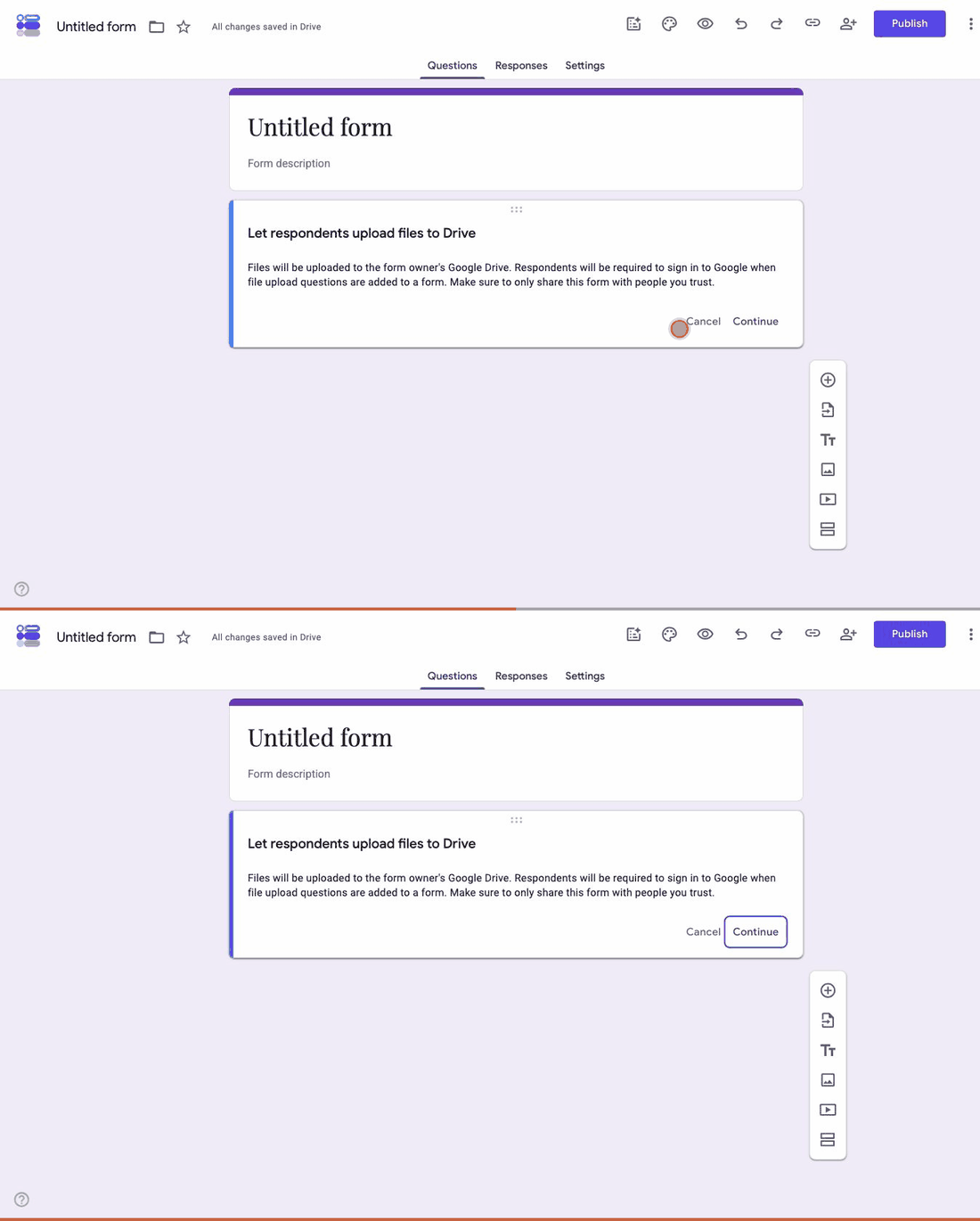
- A File upload question: Ask respondents to attach a photo or scan of their signature, the same way our guide to photo uploads in Google Forms sets one up. It comes with a hard catch: Google's question type documentation requires anyone answering a File upload question to sign in to a Google account, the question is unavailable on forms stored in a shared drive, and an administrator can block it through Data Loss Prevention. If some respondents have no Google account, this route is closed. Our post on anonymous Google Forms covers what that sign-in requirement does to anonymity.
- A typed name plus a consent checkbox: Ask for the full name in a required short answer question, then pair it with a required checkbox stating what the person agrees to. Google timestamps every response, so you get a name, an agreement and a time. For internal acknowledgements and many consent cases that is enough. For a contract it is not a signature.
Is there a free signature add-on for Google Forms?
Bolo advertises a free plan, with paid tiers for higher usage. Formesign does not: its listing puts it at $18 a month after a seven-day trial. Where a free tier exists, the cap is usually on signed documents per month, so check that cap against your monthly volume before you point a live form at it. Read the pricing on the listing itself, because these tiers move.
A free tier is worth taking only if your volume stays under its cap. If it does not, the add-on route is usually the wrong shape for the job.
Which method fits your document?
| What you are collecting | Best route | Where the signing happens | Cost | Setup |
|---|---|---|---|---|
| Consent or an acknowledgement | Typed name plus a required checkbox | In the form | Free | Minutes |
| An internal approval | Builder with a signature field | In the form | Free plan | Minutes |
| A contract or agreement | Builder with a signature field | In the form | Free plan | Minutes |
| A signed PDF filed in Drive | Signature add-on | Through the add-on | Free tier, or paid | Repeats per form |
| A signature from someone with no Google account | Builder with a signature field | In the form | Free plan | Minutes |
What Google Forms cannot do about signatures
- Offer a signature question type of its own: Add-ons work around that by adding their own signature field, and some also move the signing onto their own page.
- Verify who signed: With verified email collection on, Forms records the signed-in Google account, but nothing checks that a typed name belongs to the person typing it.
- Handle several signers in order: Signing order is an add-on feature, not a Forms feature.
- Send the signer a copy of what they signed: The response receipt is a copy of answers, not a signed document.
- Guarantee where the signature ends up: That depends on the add-on. Some write it into the response row, and others put it in a generated PDF in Drive.
Collecting the signature on the form itself
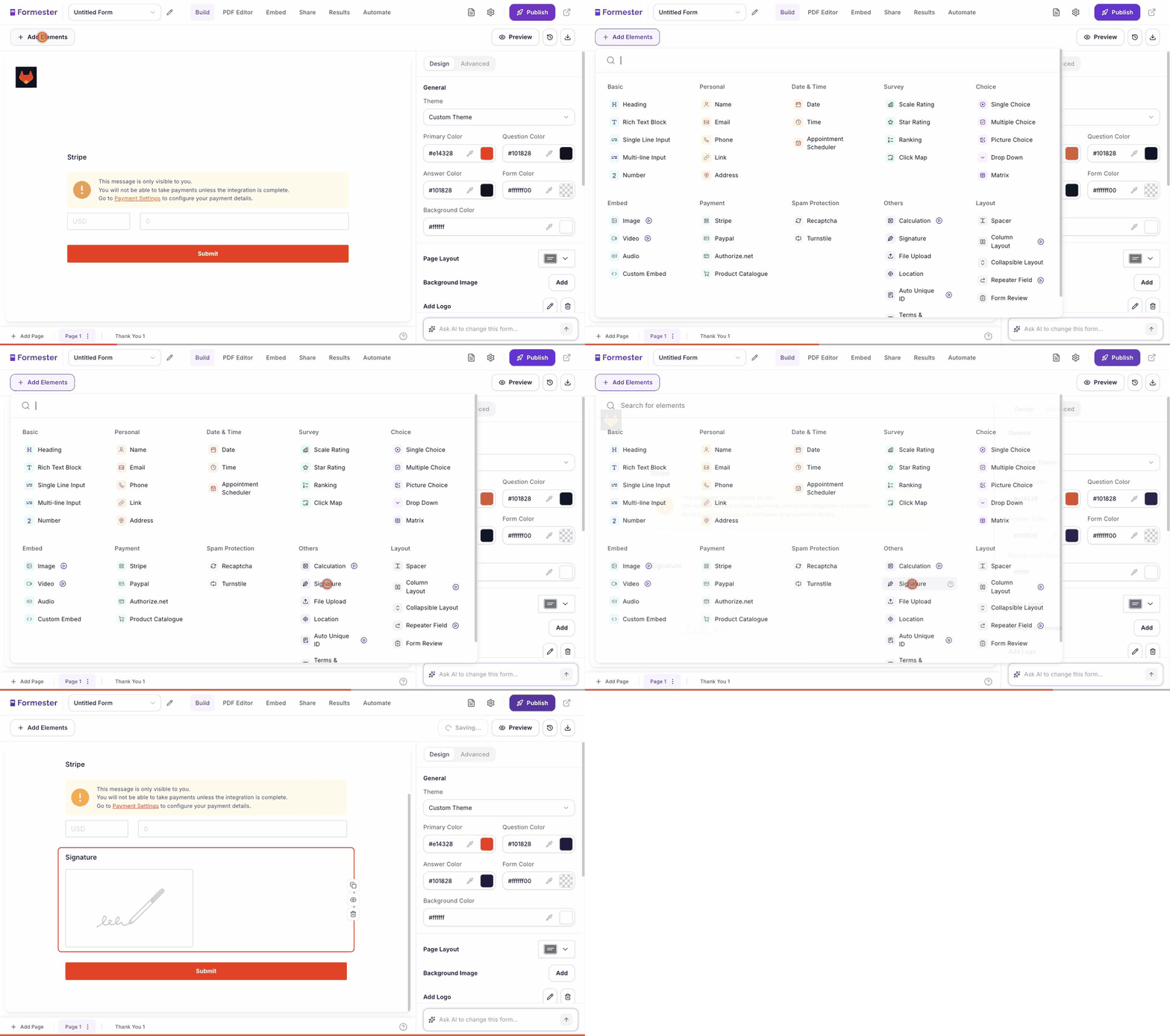
Formester has a signature field built in. Drop the Signature element onto any form from Add Elements, and people sign by drawing with a mouse, a trackpad or a finger, or by typing their name. No add-on, and no separate signing page.
Each signature is stored with the submission along with the signer's name and email and a timestamp, so the record travels with the data instead of sitting in a separate document. It works on phones, tablets and computers. The signature field is available on the free plan. For the consent case specifically, our guide on creating a consent form covers the wording as well as the mechanics, and the consent form templates come with the field already in place. To start from a short description instead, the AI consent form generator builds the form with a signature field for you to edit.
Keep the signature with the response, not in a separate PDF
Add a signature field to any form and collect the signature, the signer's details and a timestamp with every submission. Available on the free plan.
Try Formester freeFree forever · No credit card · 56,000+ teams
Related reading
- Collect liability waivers without paperwork, for the contract and waiver cases.
- Auto-fill and sign PDFs with a form, when the signature has to land on a document.
- Formester as a Google Forms alternative, if the signature is one of several things you keep working around.


